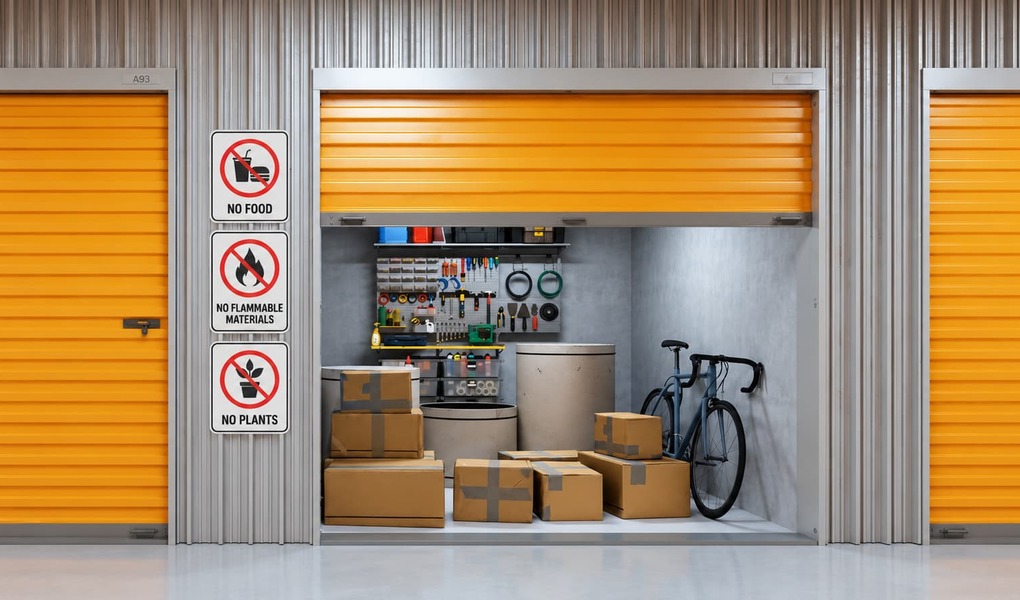
The question of what not to store in a storage unit usually comes up with something specific in your hands: a propane tank from the grill, a case of canned food, a spare car battery. Items fall into three tiers. Nearly every lease prohibits flammables, hazardous materials, perishable food, living things, and illegal goods. Car batteries, firearms, and a few other items depend on the facility. Cash, original documents, and similar items may have coverage limits and are often a poor fit for a storage unit.
Items Storage Facilities Prohibit: Flammables, Hazardous Materials and Food
Storage facilities most commonly prohibit flammable and hazardous materials, perishable food, living things, and illegal goods:
| Tier | Examples | Typical lease status | Why it matters |
|---|---|---|---|
| Prohibited at nearly every facility | Gasoline and fuels, propane, paint thinner, fireworks, corrosives; perishable food; plants and animals; people living in the unit; illegal or stolen goods | Banned | Fire, contamination, pests, legality |
| Depends on the facility | Car batteries, tires, firearms and ammunition, vehicles and gas-powered equipment, some valuables | Check the lease | Rules vary by facility and by local law |
| Not recommended or may have coverage limits | Cash and jewelry, original documents, photos, wood and leather furniture, electronics, instruments | Check the lease and protection plan; keep irreplaceable or high-value items elsewhere | Theft, humidity and heat damage, coverage limits |
The rental agreement decides where each item lands.
Flammable and Hazardous Materials
Gasoline, propane, kerosene, paint thinner, fireworks, motor oil, and pesticides are prohibited in nearly every storage lease because they create fire or contamination risk beyond a single unit. Propane stays on the list even when the gauge reads empty, because the tank can still hold vapor. Drain the fuel from lawnmowers and generators, then confirm the facility allows the equipment. Cars, boats, and RVs have their own rules at facilities that offer vehicle storage.
Food, Perishables and Living Things
Perishable food is prohibited at nearly every facility because it spoils and draws pests into neighboring units. Leases differ on canned food, so check yours. Plants add humidity, and rental agreements consistently prohibit animals or people living in a unit.
Illegal and Stolen Items
Illegal goods and stolen property cannot be stored in any storage unit, and a lease offers no protection for either.
Items That Attract Pests
The items most likely to attract pests into a storage unit are anything edible and anything that holds a scent: food residue on dishes, pet food, birdseed, and unwashed fabrics. A few crumbs in a cereal box are enough to draw rodents. Food residue, pet food, birdseed, and unwashed fabric can attract pests; check the lease before storing scented products.
Pest damage can also be your cost to absorb. Some rental agreements release the facility from liability for damage caused by rodents and insects, which makes prevention the tenant's job. Good storage unit organization is the fix: sealed, labeled containers and a clear aisle, set up as the guide on how to organize a storage unit describes.
Items That Humidity and Temperature Can Damage
Humidity and temperature swings can damage wood furniture, leather, electronics, documents and photos, instruments, artwork, and wax items such as candles. Wood can swell and loosen at the joints. Paper can curl, and photos can stick together. Moisture can condense inside electronics and corrode components. Leather can dry out and crack, or develop mildew in humid conditions.
How to prevent moisture in storage unit rentals starts with the unit type: climate-controlled storage can regulate temperature, humidity, or both, depending on the facility. Then keep items off the concrete floor, store nothing damp, and skip tight plastic wrap. The item-by-item prep guide covers wrapping for each material.
What Your Storage Lease Agreement Actually Restricts
A storage lease agreement sets the rules for your unit, including what you can store and what happens when a rule is broken. Before signing, read these sections:
- Prohibited uses and prohibited items
- Hazardous materials definition
- Right of entry
- Default and lease termination
- Insurance or tenant protection requirements
- Liability for damage
The facility-dependent items are settled here too. Car batteries: some leases ban them as corrosive, and others allow them. Tires: rules vary, so ask. Firearms and ammunition: facility policy and local law both apply, so check both. Vehicles: often allowed with conditions such as registration, insurance, and fuel rules. For cash, furs, and jewelry, the best storage unit security tips are simple: keep them in a bank or home safe, because they may be excluded from coverage.
What Happens If You Store a Prohibited Item
The consequences of storing a prohibited item come from your rental agreement, not a single industry rule. Depending on the lease, they can include:
- The facility entering the unit and removing or disposing of the item
- Charges for fines or cleanup costs the facility incurs because of it
- Lease default or termination
- A denied insurance or protection-plan claim if the prohibited item contributed to the damage
The claim risk is easy to miss. Storage unit insurance or a protection plan may exclude damage connected to pests, mold, or items the lease did not allow, so a small violation can leave you with an uncovered loss. Read the exclusions in your policy or plan before move-in.
Frequently Asked Questions
The answers below address the storage questions covered on this page.
Can I Store a Car Battery or Gasoline in a Storage Unit?
You cannot store gasoline in a storage unit; it is prohibited in nearly every lease. Car batteries depend on the facility: some leases ban batteries as corrosive materials, and others permit them. Check the rental agreement before move-in.
Will a Storage Facility Check What's in My Unit?
Whether a storage facility checks what's in your unit depends on the rental agreement you sign. Many leases give the facility a right to enter the unit, usually with notice for routine reasons and without notice in an emergency or when illegal use is suspected. Read the entry clause before you sign.
Compare Facilities and Their Rules Before You Reserve
Rules vary by facility, so compare before you commit. Before move-in, ask the facility for its prohibited-items list or a copy of the rental agreement. Packing soon? The guide to packing a storage unit covers load order and stacking.
Search by city or ZIP code on USSelfStorage.com to compare storage units near you on pricing, amenities, and reviews across 20,000+ facilities, then reserve online for free.