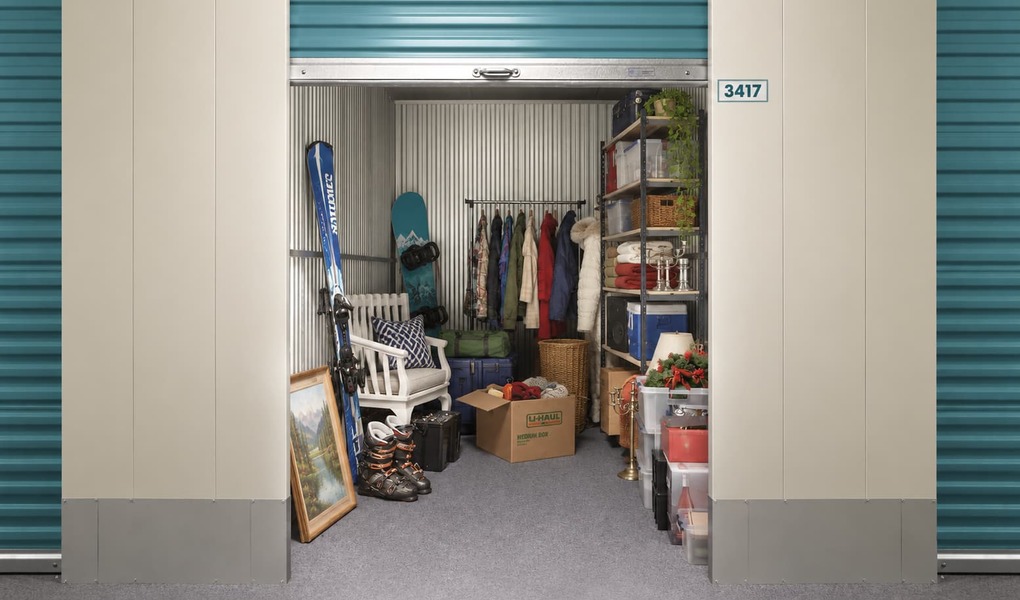
Learning how to store furniture in storage unit rentals matters most when the stay runs for months, because different materials deteriorate in different ways: moisture can affect furniture, fibers can compress in textiles, and batteries can leak inside electronics. A dresser, a TV, a stack of winter coats, and a mattress each need different prep. Work through the steps below item by item, and check anything questionable against the list of what not to store in a storage unit.
How to Prepare Furniture for a Storage Unit
Preparing furniture for a storage unit means cleaning and drying each piece, taking apart what comes apart, and covering it with breathable material instead of tight plastic. The time required depends on how much furniture you are storing and whether pieces need cleaning, drying, or disassembly.
Clean and Dry Every Piece
Clean furniture before storage, because dirt, residue, and moisture cause damage over time. Wipe solid wood with a barely damp cloth and dry it right away. Vacuum upholstery, including crevices where crumbs collect. Clean leather, and condition it if the manufacturer recommends conditioning. Every piece should go in completely dry, since damp wood and fabric can develop mildew.
Disassemble What Comes Apart
Disassemble pieces that are designed to come apart: table legs, headboards, bed frames, and removable leaves. Separated parts take less room and put less stress on the joints. Bag the hardware and tape the bag to its matching piece, then stand tabletops and large flat panels on end.
Wrap With Breathable Covers, Not Tight Plastic
Wrap furniture in breathable covers, because tight plastic can trap condensation against the surface. When temperatures shift, moisture can form under non-breathable wrap and sit on the finish. Put furniture pads, blankets, or cotton sheets against the furniture first. If you use plastic, keep it as a loose outer layer, and do not let it touch wood, leather, or upholstery directly.
Use this sequence for a room of furniture:
- Clean and dry each piece.
- Disassemble and bag the hardware.
- Wrap each piece in pads or blankets.
- Add plastic only as a loose outer layer, if at all.
- Raise every piece off the concrete floor.
- Load the unit back to front, following the guide to packing a storage unit.
Does Furniture Need Climate-Controlled Storage?
Solid wood, leather, upholstered furniture, and antiques are strong candidates for climate-controlled storage on long stays, because humidity and temperature swings can warp wood, encourage mildew, and dry out leather. Standard units do not regulate temperature or humidity, so conditions can change with the weather and seasons. Each facility sets its own climate-control range, so ask before you reserve.
| Material | Prep before storage | Cover | Climate-controlled storage |
|---|---|---|---|
| Solid wood | Clean, dry, disassemble | Pads or blankets; no tight plastic | Recommended for long-term storage |
| Upholstery | Vacuum, dry fully | Breathable fabric cover | Recommended for long-term storage |
| Leather | Clean; condition if recommended | Breathable cover | Recommended |
| Metal | Clean, dry | Plastic acceptable as outer layer | Less sensitive; depends on humidity |
| Electronics | Remove batteries and discs; back up data | Original or padded box; anti-static bags | Recommended |
| Mattress | Clean, dry | Mattress storage cover | Recommended for long-term storage |
| Clothing (natural fibers) | Wash, dry | Sealed bins or wardrobe boxes | Recommended for long-term storage |
If most of your list is wood, leather, or electronics, compare climate-controlled storage at facilities near you before choosing a standard unit.
How to Store Electronics in Storage Unit Rentals
Knowing how to store electronics in storage unit rentals comes down to four things: a data backup, batteries and discs removed, a padded or original box, and climate control for long stays. Back up first so a storage problem never becomes a data loss. Then photograph cable connections on the back of a TV or receiver so reassembly is easy.
Remove batteries from remotes, clocks, toys, and other devices, because aging alkaline batteries can leak and corrode contacts. Bag the batteries separately and follow the manufacturer's guidance; some leases restrict batteries, so check the rental agreement. Pack devices in their original boxes if you kept them, or in padded boxes that keep them from shifting. Put loose components and cards in anti-static bags, which help prevent electrostatic discharge. Add silica gel packs to each box.
Keep TVs and monitors upright, and do not stack anything on them. After retrieval, let a cold device reach room temperature before powering it on.
How to Store Clothes in Storage Unit Rentals: Vacuum Bags vs. Wardrobe Boxes
The rule for how to store clothes in storage unit rentals is to wash and fully dry everything first, then pack by fabric and storage time. Vacuum bags suit short-term storage, sealed bins suit folded clothes, and wardrobe boxes suit anything on a hanger. Washing removes body oils and residue that can yellow fabric, and one damp item can spread mildew to everything packed with it.
Vacuum bags save room by compressing clothes, and that compression is the trade-off. On long stays, down can lose its loft, wool fibers can flatten, and leather can crease permanently, so use breathable storage for those materials. Skip dry-cleaning plastic and loose garbage bags, which can trap moisture. Cedar blocks help deter moths without the lingering smell of mothballs.
Use this guide for packing:
- Vacuum bags: synthetics, short-term storage, and loads where space is tight
- Sealed plastic bins: everyday folded clothes
- Wardrobe boxes: suits, dresses, and anything that hangs
- Avoid: loose plastic bags, damp items, and mothballs
How to Store a Mattress in Storage Unit Rentals
The short answer on how to store a mattress in storage unit rentals is flat, in a mattress storage cover, with nothing stacked on top. Keeping it flat supports the whole surface and helps prevent the comfort layers from shifting or sagging. Clean and fully dry the mattress first, and unroll a bed-in-a-box mattress before long-term storage instead of recompressing it.
A cover keeps dust and moisture off, but thick, fully sealed plastic can trap humidity against the mattress, especially in a standard unit. A purpose-made mattress storage cover, or a breathable cover in a climate-controlled unit, suits longer stays. Keep the mattress off the concrete floor, and check the storage unit size guide if a queen or king needs to fit alongside other furniture.
Store a mattress flat whenever possible. If vertical storage is unavoidable, follow the mattress manufacturer's storage and warranty instructions before choosing how long to leave it on its side.
How to Store Books, Antiques and Artwork Long-Term
Books, antiques, and artwork all need stable conditions and protection from pressure, but each needs slightly different prep.
Books
For how to store books long term, pack them in small, sturdy boxes so each box stays manageable and the bottom row does not crush. Keep spines supported, and avoid piling heavy boxes on top. Do not wrap books in newspaper, because its acidity can transfer to paper and cloth.
Antiques
For how to store antiques, wrap each piece in acid-free tissue first, then add a breathable outer layer. Use bubble wrap to pad corners and edges, but do not seal the whole piece in it. Antiques made with wood, leather, paper, or textiles are strong candidates for climate-controlled storage.
Artwork
For how to store artwork, keep framed pieces upright and off the floor, with a cloth cover and nothing leaning against the front of the frame. Canvas and paper can react to humidity, so stable conditions matter as much as wrapping. For fragile pieces, open shelving is safer than stacking; the guide on how to organize a storage unit covers shelving and zones.
Frequently Asked Questions
The answers below address common questions about storing furniture and household items long-term.
Should Electronics Go in Climate-Controlled Storage?
Electronics should go in climate-controlled storage when the stay is long or the local climate brings high humidity and wide temperature swings, because condensation inside a device can corrode contacts and circuit boards. For shorter stays, padded boxes, removed batteries, and silica gel packs provide basic protection.
Can You Store a Mattress Standing Up?
You can store a mattress standing up only after checking the mattress manufacturer's storage and warranty instructions. Store a mattress flat whenever possible, with nothing on top, because vertical storage can affect some mattress constructions and warranties.
Find Climate-Controlled Storage Near You
Once the prep list is done, the moving checklist for using storage lines up the timing, and the storage tips hub has more prep pointers.
Search by city or ZIP code on USSelfStorage.com to compare storage units near you on pricing, amenities, and reviews across 20,000+ facilities, including climate-controlled storage, then reserve online for free.