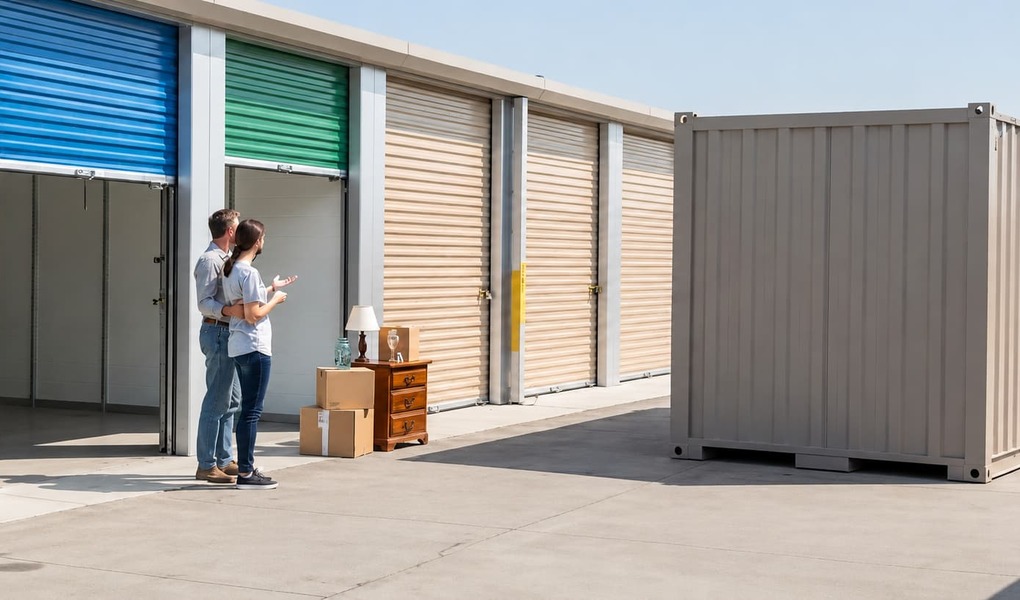
Traditional storage units, with prices ranging from pricing varies, remain stationary at a facility, requiring customers to transport belongings themselves. Portable storage pods deliver directly to a residence, allowing packing on-site before pickup. Storage units suit long-term needs and offer facility security features, while pods prioritize convenience for moves and renovations.
Key Takeaways
- U.S. Self Storage operates locally in Albuquerque, NM with consistent staff throughout your entire storage experience.
- Traditional storage units typically cost less than portable storage pods for most household needs.
- PODS relies on call centers, while U.S. Self Storage provides direct local service without outsourcing.
- Portable storage pods work best for moves and renovations; traditional units suit long-term storage needs.
What Sets Storage Units and PODS Apart?
Location defines the core difference. Traditional facilities require renters to transport belongings to a fixed site. portable storage containers arrive directly at a home for loading on the owner's own schedule. This distinction shapes nearly every decision in the storage unit vs portable storage comparison.
Cost, convenience, and accessibility separate the two options in practical terms. A fixed-site storage unit offers a set space at a physical address, secured under facility hours and access rules. A portable storage pod, by contrast, sits in a driveway or yard until the renter finishes packing, then ships to a storage yard or a new home. Neither model suits every situation equally; the right fit depends on timeline, budget, and how much handling a renter wants to do personally.
Which option handles a wider range of storage needs?
Storage units serve a broader set of everyday purposes. Moving, business inventory, home organization, and vehicle storage all fall within their common use cases, since fixed facilities offer multiple unit sizes and specialized spaces for each purpose.
Does location or cost matter more when comparing storage options?
Both factors carry weight, and neither should be evaluated alone. Comparing nearby facilities reveals real differences in monthly prices, available unit sizes, and current openings before a renter commits to either path.
The table below summarizes the baseline distinctions renters weigh in the pods vs self storage decision:
| Factor | Storage Unit | Portable Pod |
|---|---|---|
| Loading location | On-site at facility | At renter's home |
| Common uses | Moving, business, home organization, vehicles | Moving, temporary staging |
| Access | Facility hours | Owner's schedule until pickup |
How Do Storage Units and PODS Work?
Two different systems govern how belongings get stored and accessed. Traditional facilities require self-transport, while portable storage containers arrive at the customer's doorstep. The core distinction between a storage unit vs portable storage comes down to who moves the boxes and when.
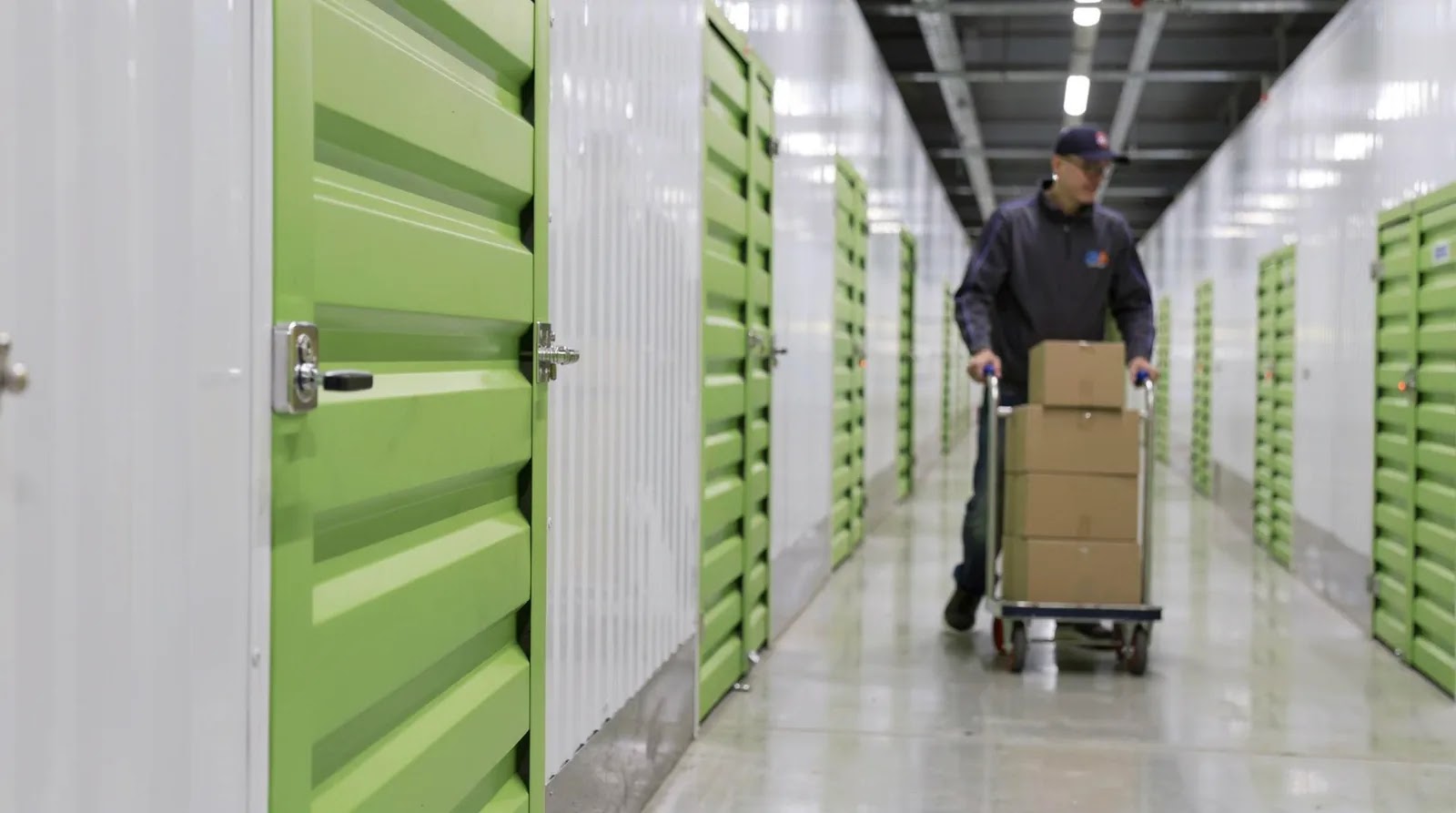
Renting a traditional storage unit generally means the renter transports items to and from the facility on their own schedule. Homeowners load a truck, drive to the site, and unload into a designated space. Long-standing facilities have served as a dependable go-to solution for decades, offering straightforward access without delivery logistics. Portable containers flip that model: a company drops a container at a residence, the customer fills it at their own pace, and the container gets hauled to storage or a new destination.
What sizes are available for each option?
Unit sizing tends to follow similar patterns across both formats. Smaller 5x5 and 5x10 units suit boxes. Small household items, making them practical for renters clearing out a single room. Medium-sized 10x10 units fit apartment contents or multiple rooms, positioning them as a common mid-range choice for renters and small households alike.
Which setup demands more hands-on effort?
Traditional units place the transportation burden entirely on the renter. Pods vs self storage comparisons often hinge on this labor difference, since portable containers reduce driving but still require loading.
| Feature | Storage Unit | Portable Storage |
|---|---|---|
| Transport | Renter drives to facility | Container delivered to home |
| Loading location | On-site | At residence |
| Common sizes | 5x5, 5x10, 10x10 | Varies by provider |
Choosing between the two depends largely on how much control a renter wants over timing and travel.
Which Option Costs Less Over Time?
Traditional storage units cost less over time for most long-term renters. Monthly rates for standard facilities typically range from pricing varies, depending on unit size, location, and features. Portable storage containers often carry delivery fees, pickup charges, and fuel surcharges that stack on top of the base rate, expenses that self-storage renters simply don't face.
The comparison between storage unit vs portable storage costs depends heavily on how long belongings stay in storage. Short moves may favor portable storage, since a single container often handles loading, transport, and drop-off in one transaction. Long-term storage tells a different story. Traditional self-storage remains dependable, secure, and cost effective for extended use, which matters most for renters storing furniture, seasonal items, or business inventory for months at a time.
Are Storage Pods Cheaper Than Storage Units?
Not necessarily. Many renters assume pods vs self storage options deliver identical value. The cost structures differ in ways that affect the final bill. Delivery logistics, distance fees, and container size restrictions can push portable options above the price of a comparable self-storage unit.
How Can Renters Find the Best Storage Value?
Comparing multiple facilities remains the most reliable way to find affordable, budget-friendly storage. Renters should request quotes from several providers before committing.
| Factor | Traditional Storage | Portable Storage Containers |
|---|---|---|
| Monthly cost | Pricing varies–pricing varies | Base rate plus delivery/pickup fees |
| Best for | Long-term storage | Short-term moves |
| Access | On-site, drive-up options | Limited during transport |
Renters weighing both paths should request itemized pricing before signing any agreement.
Which Storage Solution Fits Your Move?
Local circumstances determine the better fit between a traditional storage unit and a portable container. Renters across markets use storage units for moving, business inventory, home organization, and vehicle storage, which signals how broadly the format serves different needs. The storage unit vs portable storage decision often comes down to timeline, accessibility, and how much control a customer wants over loading and delivery.
Traditional facilities offer variety that portable options rarely match. Storage types available at many locations include climate-controlled storage, drive-up units, indoor storage, and dedicated vehicle storage. This range allows renters to match unit type to the item being stored, whether that means a temperature-sensitive item or a boat parked outdoors.
Portable storage containers solve a different problem: they arrive at a home or business, sit there during loading, then travel to a facility or a new address. Portable storage containers appeal to movers who want to pack on their own schedule without renting a truck.
Does it matter who staffs the storage company?
Service consistency matters more than most renters expect. Locally staffed providers assign the same team to a customer throughout the entire move or storage period, rather than routing calls through a distant center. That continuity reduces miscommunication during time-sensitive moves.
What are portable containers made from?
Construction quality varies significantly between providers. Some containers use all-steel or steel-and-FRP (fiber-reinforced plastic) panels, while others rely on wood-and-plastic builds. Steel construction generally withstands weather exposure and repeated transport better than lighter materials.
Weighing pods vs self storage requires looking past price alone. A comparison table clarifies the trade-offs:
| Factor | Traditional Storage Unit | Portable Container |
|---|---|---|
| Loading location | On-site at facility | Delivered to home first |
| Unit variety | Climate-controlled, drive-up, indoor, vehicle | Single container type |
| Support model | Local staff throughout rental | Varies by provider |
| Construction | Facility-built, fixed | Steel/FRP or wood/plastic |
Renters facing a long-distance move often lean toward containers. Those needing flexible, varied storage types tend to choose a traditional unit.
How Do You Choose and Reserve Space?
Selecting the right unit starts with comparing options nearby rather than settling for the first listing found. Renters who search local facilities gain three advantages: faster price comparisons, quicker access to available units, and clearer visibility into convenient move-in dates. Deciding between a storage unit vs portable storage setup often comes down to timeline. How much handling the household wants to manage. Once that decision is made, reserving space should be simple and low-risk.
U.S. Self Storage, with a location in Albuquerque, NM, reflects the kind of local presence renters should look for when searching nearby options. Local facilities typically make comparison shopping easier than chasing multiple companies across a region.
Can renters reserve a unit without paying upfront?
Yes. Units can be reserved online at no cost, and no credit card is required to hold a space. This removes financial pressure before move-in day arrives. Renters can lock in a unit early and finalize plans as their move date approaches.
What features matter most when comparing units?
Security and climate control top the list for most households. Look for:
- Gated access to limit entry to authorized renters
- Surveillance systems for added protection
- Climate control to protect sensitive belongings
- Drive-up convenience for easier loading and unloading
These features separate a basic space from one built for long-term peace of mind.
The choice between storage units and portable storage pods ultimately depends on your specific needs, budget constraints, and operational preferences. Both solutions offer distinct advantages for different situations. Traditional storage units provide established infrastructure and accessibility, while portable pods deliver convenience and flexibility. Evaluate your timeline, frequency of access, and space requirements to determine which option aligns with your circumstances. U.S. Self Storage remains committed to providing reliable storage solutions tailored to your requirements.
FAQ
What is the main difference between storage units and portable storage pods?
Storage units remain stationary at a facility, requiring renters to transport belongings themselves. Portable storage pods deliver directly to a residence for on-site packing before pickup.
Which option costs less, storage units or portable storage pods?
Traditional storage units typically cost less than portable storage pods for most household needs, with prices ranging from pricing varies.
Which storage option works best for moving or renovations?
Portable storage pods work best for moves and renovations. They arrive at the home for packing on the owner's own schedule, while traditional units suit long-term storage needs.
Facts
- U.S. Self Storage is located at 720 1st St NW, Albuquerque, NM 87102.