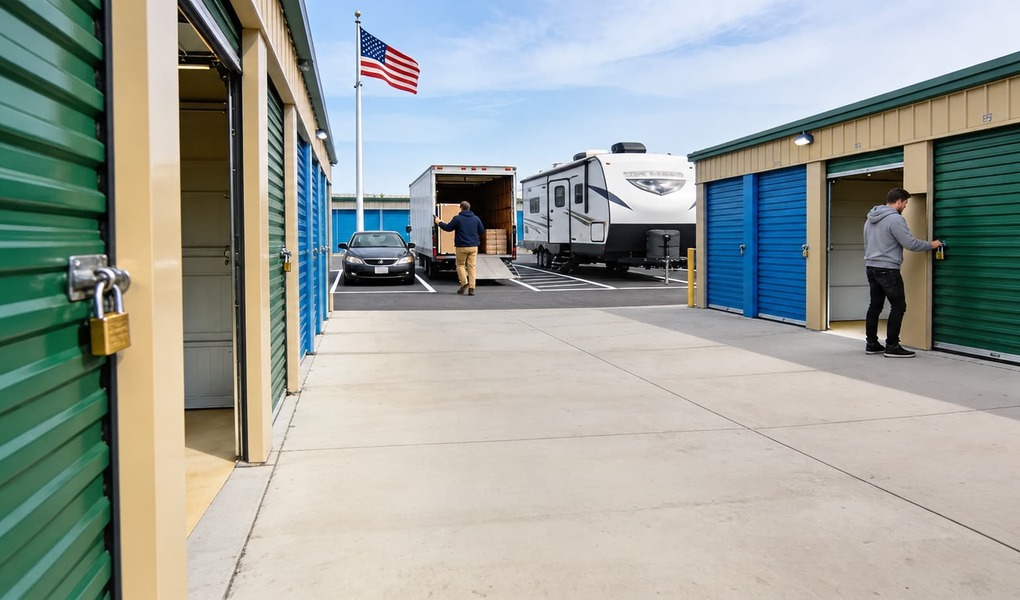
Covered storage protects RVs and vehicles from UV damage. Hail, costing more than outdoor spaces but less than fully enclosed units. U.S. Self Storage in Albuquerque, NM offers gated, monitored lots for security. Winterizing requires draining fluids, disconnecting batteries, and covering tires before long-term storage at 720 1st St NW.
Vehicle storage spans covered, uncovered, and enclosed options, with RV storage costs averaging $35–$582 monthly—outdoor uncovered runs $35–pricing varies while covered protection costs $45–$385. Prioritize enclosed units for security and winterize before the first hard freeze to prevent cracked pipes and dead batteries.
Vehicle storage options include outdoor parking, covered spaces, and enclosed units, with monthly rates ranging from $50 to pricing varies depending on vehicle size and storage type. Enclosed storage costs more but shields RVs, cars, boats, and motorcycles from weather. Winterizing before hard freezes prevents cracked pipes, dead batteries, and costly spring repairs.
Key Takeaways
- Proper RV winterization prevents cracked pipes and dead batteries, protecting your investment's reliability and resale value.
- U.S. Self Storage operates over 20 facilities across the region, serving thousands of vehicle storage customers.
- Covered parking protects vehicles from weather damage while costing less than fully enclosed storage units.
- Enclosed storage units offer maximum security and protection for high-value vehicles, boats, and motorcycles year-round.
What Will You Accomplish With This Guide?
This guide answers three practical questions for owners parking a vehicle at home or on the street: which storage type fits which vehicle, what it costs to compare options, and how to prepare before move-in. Vehicle storage spans outdoor parking, covered spaces, and enclosed units built to accommodate cars, RVs, boats, and other vehicles. Owners who understand these categories avoid paying for protection they don't need. Or worse, leaving a boat exposed to weather it can't handle.
Readers will walk away able to evaluate a facility the way an experienced renter does: by comparing several locations rather than settling on the first listing found.
How Should Someone Compare Storage Facilities Before Renting?
Comparing multiple facilities matters more than picking the nearest one. Renters who check several locations typically find better pricing and more available space than those who stop at the first search result. Location-based searching also lets renters weigh availability, features, and move-in terms side by side before committing.
Use this sequence when comparing options:
- List nearby facilities by searching a city, ZIP code, or neighborhood.
- Note the storage types offered — outdoor, covered, or enclosed.
- Compare pricing and available features across each listing.
- Confirm move-in requirements before reserving a space.
What Vehicle Types Does This Guide Cover?
Coverage extends across the full range of personal vehicles owners typically need to store. That includes car storage, rv storage, boat storage, motorcycle storage, trucks, and trailers, plus indoor vehicle storage for those wanting maximum protection.
Each vehicle category carries different size, height, and access needs. Later sections break down sizing and preparation steps for each type individually.
Which Vehicle Storage Type Fits You Best?
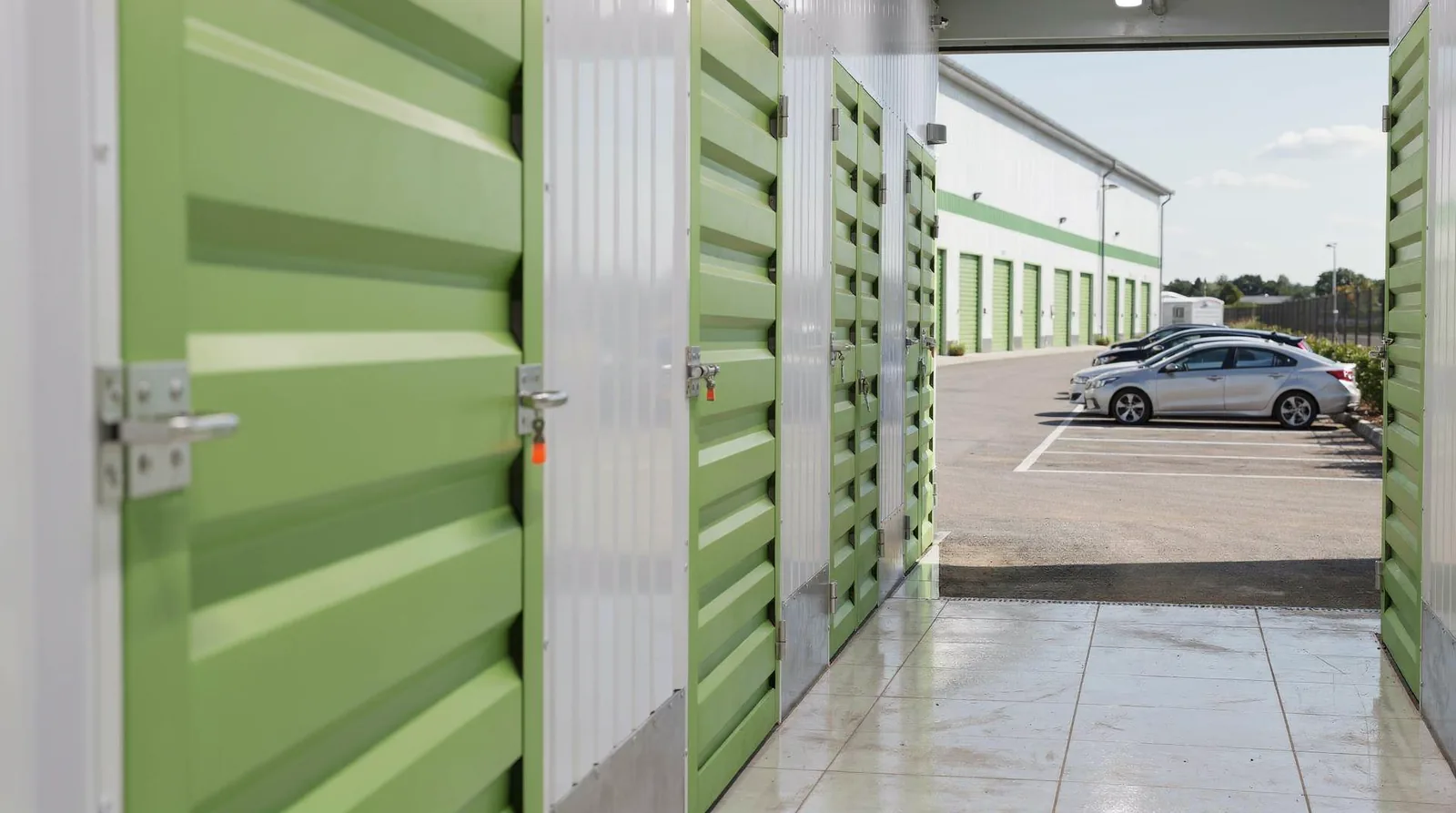
The best fit depends on the vehicle owner's budget, the vehicle type, and the level of protection required. Vehicle storage generally falls into three categories: outdoor parking, covered storage, and enclosed units. Outdoor spaces typically cost less, while covered or enclosed options carry a higher price tag in exchange for stronger protection.
Choosing between covered and uncovered storage marks a critical decision point for anyone planning long-term vehicle care. Both formats deliver the security and structure of a dedicated facility. They differ sharply in the shielding they provide against sun, rain, and temperature swings. A convertible left uncovered through a humid summer faces different risks than a trailer parked under a roof.
| Storage Type | Typical Cost | Best For |
|---|---|---|
| Outdoor parking | Lower cost | Car storage, trailers, short-term needs |
| Covered storage | Moderate cost | Boat storage, motorcycle storage, seasonal protection |
| Enclosed/indoor units | Higher cost | RV storage, classic cars, year-round climate defense |
Is indoor storage worth the extra cost for an RV or boat?
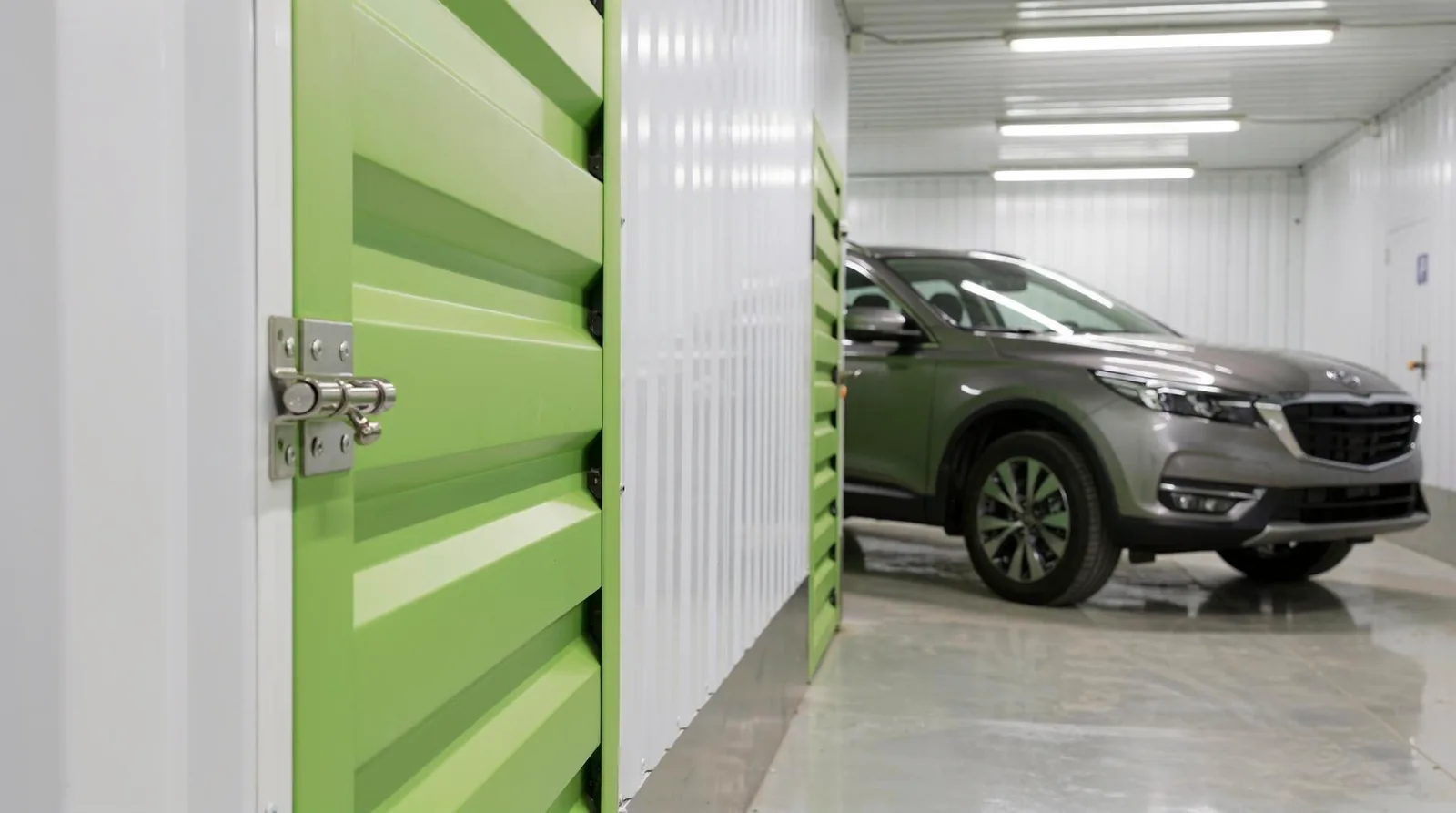
Indoor vehicle storage shields a motorhome, trailer, or boat from UV exposure, hail, and temperature extremes that accelerate wear on seals and upholstery. Facilities offering this option often pair it with climate-controlled storage and drive-up units, giving owners flexible access alongside stronger protection. Owners planning to keep a vehicle stored for months, rather than weeks, typically find the added cost justified.
Does a motorcycle need the same protection as an RV?
Motorcycle owners generally need less space but similar protection logic applies. Covered storage guards against rust and fading, while enclosed units add security for higher-value bikes. Matching protection level to vehicle value, rather than defaulting to the cheapest option, keeps long-term maintenance costs down. Facilities that combine indoor storage, climate control, and vehicle spaces let owners select the exact balance of cost and coverage their situation demands.
How Much Does Vehicle Storage Cost?
Monthly rates for vehicle storage generally fall between $50 and pricing varies, depending on vehicle size, facility location, and storage type. Prices climb higher for enclosed spaces and drop for open-air lots. Vehicle owners comparing options should treat unit type, not just square footage, as the primary cost driver.
RV storage shows the widest price spread of any vehicle category. Rates average $35 to $582 per month across all storage formats, a range wide enough to catch owners off guard if they price-shop only once. Outdoor uncovered spaces for a trailer or motorhome typically cost $35 to $363 monthly. Covered parking, which shields against sun and precipitation, averages $45 to $385. Fully enclosed indoor storage sits at the top of the range, running $50 to $582 per month.
Why does storage type change the price so much?
Protection level drives the cost difference more than any other factor. Open-air parking costs less because it requires minimal infrastructure. Covered and enclosed indoor vehicle storage demand roofed structures, climate control, and tighter security. Owners of boats, motorcycles, and classic cars often accept higher rates for that added shelter.
| Storage Type | Typical Monthly Range |
|---|---|
| Outdoor uncovered | $35 – $363 |
| Covered | $45 – $385 |
| Indoor / enclosed | $50 – $582 |
Does the type of vehicle affect pricing?
Yes. Car storage, boat storage, and motorcycle storage each carry different rate structures based on the space and equipment required. A motorcycle needs far less square footage than a boat on a trailer, which typically lowers the monthly rate. Boats and larger trailers often push costs toward the higher end of the range because of their length and clearance needs.
Renters should request quotes from several facilities before committing to a unit. Comparing multiple locations reveals pricing gaps that a single quote never shows. Helps owners match their budget to the right level of protection.
How Do Car and RV Storage Needs Differ?
Cars require compact, flexible spaces, while recreational vehicles and boats demand far more room to maneuver. Car storage typically fits within standard-sized units or single parking spaces, offering renters flexibility without excess square footage. Facilities designed for RV storage and boat storage, by contrast, require larger footprints and wider access lanes to accommodate turning radius, hitches, and towing equipment.
Space allocation reflects this divide directly. A dedicated area for a sedan differs sharply from the drive-up access a motorhome needs. Facilities that serve both vehicle categories typically separate them into distinct zones, matching unit size to vehicle type rather than forcing a one-size-fits-all layout.
What size unit fits an RV or boat?
Units measuring 10x20 feet or larger generally accommodate RVs, boats, and other oversized vehicles. Smaller vehicles, including sedans, coupes, and motorcycles, fit comfortably in reduced footprints. Selecting the correct dimensions before booking prevents wasted rental costs and avoids the frustration of a unit too tight for safe entry and exit.
Why do storage needs vary so much by vehicle type?
Vehicle storage exists alongside several other common rental purposes. Storage units regularly support moving transitions, business inventory, home organization projects, and vehicle storage simultaneously. This pattern repeats across markets nationwide, including facilities in Las Vegas, where the same combination of uses applies.
Below is a general breakdown by vehicle category:
| Vehicle Type | Typical Space Need | Access Priority |
|---|---|---|
| Car / motorcycle storage | Compact, flexible | Standard access |
| Boat storage | Large, open | Wide drive-up |
| RV storage | Largest available | Easy maneuvering |
Motorcycle storage falls closer to car storage in terms of space needs, while indoor vehicle storage suits owners across every category seeking added protection from weather exposure. Matching vehicle type to unit size remains the deciding factor in a satisfactory rental experience.
How Should You Prepare a Boat or Motorcycle?
Preparation begins with clearing the driveway of clutter and checking local rules before moving a vessel or bike into storage. Many homeowner associations restrict driveway parking for large vehicles. A boat or trailer left in plain sight can violate those covenants. Professional storage removes that risk entirely. Owners reclaim their driveway space at home while their vehicle stays secured behind gates and cameras.
Storage facilities set aside dedicated areas for different vehicle categories, separating boat storage spots from motorcycle storage spaces and standard car storage rows. This separation matters because boats and motorcycles have different footprints, height clearances, and tie-down needs than sedans or trucks. Assigning distinct zones keeps loading lanes clear and reduces the chance of accidental damage from neighboring vehicles.
Follow these steps before drop-off:
- Confirm the facility offers a section suited to the vehicle's size and type.
- Check for gated access and surveillance coverage on the assigned space.
- Ask whether climate control is available for units housing electronics-heavy motorcycles or boats with sensitive upholstery.
- Choose drive-up spaces if frequent access is expected during boating or riding season.
Does a Motorcycle Need Indoor Storage?
Indoor placement offers stronger protection against moisture, dust, and temperature swings than an open lot. Indoor vehicle storage suits motorcycles with leather seats, chrome finishes, or exposed wiring that corrodes under humidity. Riders planning long off-season gaps benefit most from an enclosed unit rather than uncovered parking.
What Should Boat Owners Check Before Storing?
Boat owners should verify gate hours, surveillance coverage, and drive-up access before signing a lease. Facilities offering dedicated boat sections reduce collision risk from tighter parking near cars or trailers. Confirming climate control availability protects engines and upholstery from extreme heat or cold across the storage term.
FAQ
What is the cost difference between covered and outdoor vehicle storage?
Outdoor uncovered storage runs $35–$363 monthly, while covered protection costs $45–$385. Enclosed units cost more but shield RVs, cars, boats, and motorcycles from weather.
Why does winterizing a vehicle matter before storage?
Winterizing before the first hard freeze prevents cracked pipes and dead batteries. This protects the vehicle's reliability and resale value while avoiding costly spring repairs.
How should renters compare storage facilities before committing?
Renters should list nearby facilities, note storage types offered, compare pricing and features, and confirm move-in requirements. Checking multiple locations typically reveals better pricing and more available space than settling on the first result.