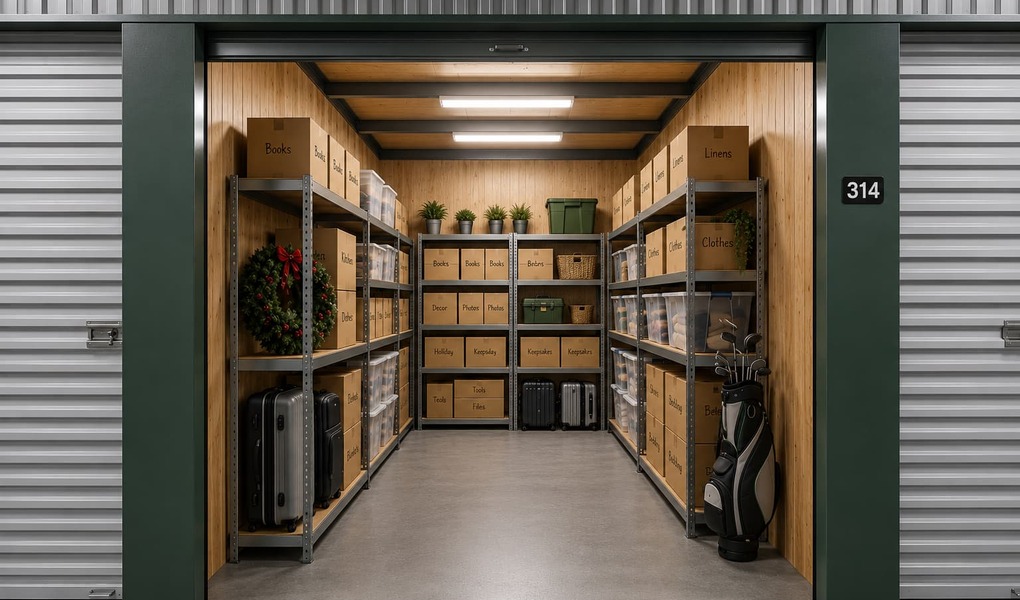
Most people fill a storage unit, shut the door, and pay for the same square footage month after month without realizing they could reclaim a significant chunk of that space in an afternoon.
These storage unit hacks cover everything from vacuum-seal bags to color-coded labels, and some renters who apply all 11 end up downsizing to a smaller, cheaper unit entirely.
11 Storage Unit Hacks
1. Use Vacuum-Seal Bags for Bulky Soft Goods
Bedding, pillows, winter coats, and sleeping bags are among the biggest space wasters in any storage unit. A vacuum-seal bag compresses soft items to a fraction of their original size without damaging the material.
Buy a set of large vacuum-seal bags and use a standard household vacuum to remove the air. Stack the compressed bags flat on shelves or at the bottom of boxes. You can cut the floor space these items take up by more than half.
2. Lay Down Pallets Before You Stack Anything
Moisture from a concrete floor is one of the most common causes of mold, warping, and rust in a storage unit. Placing wood pallets or plastic risers on the floor before loading anything creates a buffer between your belongings and the slab.
Pallets are often free from grocery stores, home improvement retailers, and garden centers. This is one of the most overlooked storage unit space saving ideas, and it takes about 10 minutes to set up before your first load arrives.
3. Build Vertical Storage With Freestanding Shelves
Floor space fills up fast. Vertical space almost always goes unused. A set of metal wire shelves or plastic shelving units from a hardware store turns dead air above your boxes into usable storage.
Freestanding shelving also makes it easier to access items in the back of the unit without having to move everything in front. When shopping for storage unit shelving ideas, look for units with adjustable shelves so you can customize height based on what you are storing.
4. Use Dresser Drawers as Hidden Storage
Before you push your dresser into the unit, fill every drawer with small items: folded clothes, linens, books, kitchen gadgets. The drawers are already there, so there is no reason to leave them empty.
This is one of the most practical creative storage unit ideas because it adds storage capacity without adding any boxes. Wrap the dresser in moving blankets to protect the finish, and the drawers will keep everything inside contained during the move.
5. Label Every Box on the Side, Not the Top
Boxes get stacked. The top label disappears the moment you put another box on it. Write the label on the side of every box so you can read it from across the unit without moving anything.
Take it a step further with a color-coded label system: one color per room or category. Blue labels for kitchen items, red for bedroom, green for holiday decorations. A color-coded system lets you spot what you need in seconds, which saves time on every visit and reduces how often you dig through stacked boxes.
6. Build a Master Inventory Spreadsheet
A written or digital inventory is one of the storage unit organization hacks that takes the least effort upfront and pays off the most over time. Before you load anything into the unit, write down each box number and its contents.
Store the spreadsheet on your phone so you can check whether an item is in the unit before you make the drive. If it turns out you do not actually need it right away, you save yourself a wasted trip. Google Sheets works well for this and is free.
7. Store Furniture Vertically When Possible
Sofas, bed frames, and mattresses take up much less floor space when stored on their sides or on end. Stand mattresses vertically against a wall. Tip sofas onto one end. Lean headboards and footboards together.
Check that the floor and walls are dry before leaning anything against them. Placing a moving blanket between furniture and the wall adds a layer of protection. This single adjustment can open up several square feet in a unit that feels packed.
8. Disassemble Everything You Can
Tables, bed frames, shelving units, and desks take up far less space when broken down into flat pieces. Remove legs from tables and tape them to the underside of the tabletop. Keep bolts and hardware in a labeled zip-lock bag taped directly to the furniture piece.
Disassembly is not just a space-saving move. It also reduces the chance of items getting damaged or knocked over during storage. Flat pieces stack cleanly and can be slid along the wall to free up the center of the unit for boxes and bins you will need to access regularly.
9. Place Frequently Accessed Items Near the Front
This sounds obvious, but most people load a unit based on what fits where, not what they will need first. Before loading, separate your items into two groups: things you will likely need during the storage period, and things that can sit untouched until you move them out.
Put the "will need" group closest to the door. Put the "can wait" group at the back and in the top rows. This prevents the frustrating scramble of moving 20 boxes to reach a single item, and it protects fragile or heavy items from repeated handling.
10. Use a Climate-Controlled Unit for Temperature-Sensitive Items
Standard units are fine for furniture and most household goods. Electronics, wood instruments, photographs, wine, artwork, and documents can warp, crack, or degrade in extreme heat or cold.
A climate-controlled storage unit maintains a consistent temperature and humidity level year-round. The monthly cost difference between standard and climate-controlled is often smaller than people expect. Weigh that cost against what you would spend replacing damaged items. For anything irreplaceable, climate control is worth it.
11. Think in Zones, Not Rows
Rather than filling a unit row by row from back to front, organize the unit into zones by category: a furniture zone along one wall, a box zone along another, a seasonal zone near the back. Leave a narrow aisle down the center so you can reach every zone without rearranging.
Zone-based storage is one of the most practical storage unit organization hacks for renters who visit their unit regularly. It also makes moving out faster because you can load items by zone rather than searching the entire unit for related pieces.
Frequently Asked Questions
What is the best way to organize a storage unit cheaply?
The most cost-effective approach is to use items you already have: fill dresser drawers before loading them, use color-coded masking tape instead of buying a labeling kit, and repurpose cardboard boxes from grocery stores. Free pallets from local retailers protect your floor items from moisture. A free spreadsheet app handles inventory. None of these require spending money.
How do I keep my storage unit from getting moldy?
Moisture control starts at the floor. Elevate everything on pallets or plastic risers so air can circulate beneath your belongings. Avoid storing wet or damp items, and use sealed plastic bins instead of cardboard boxes for anything vulnerable to humidity. If you are storing items in an area with high seasonal humidity, a climate-controlled unit is the most reliable way to protect against mold and mildew.
Can I downsize my storage unit to save money?
Yes, and it is more common than most renters realize. After applying basic space saving ideas like vertical shelving, vacuum-seal bags, and furniture disassembly, many renters find they no longer need the unit size they originally rented.
Visit your unit after reorganizing, estimate how much space you are actually using, and compare that to the storage unit sizes available at your facility. A transfer to a smaller unit can reduce your monthly bill without requiring you to get rid of anything.
Start Storing Smarter
A few hours of reorganization can turn a packed, hard-to-navigate unit into one that is easy to use and significantly cheaper to rent. Whether you need to free up space, protect your belongings from moisture, or cut your monthly bill, these storage unit hacks give you a clear place to start.
Search available storage units near you at usselfstorage.com, compare unit sizes and pricing, and reserve online for free with no credit card required.
