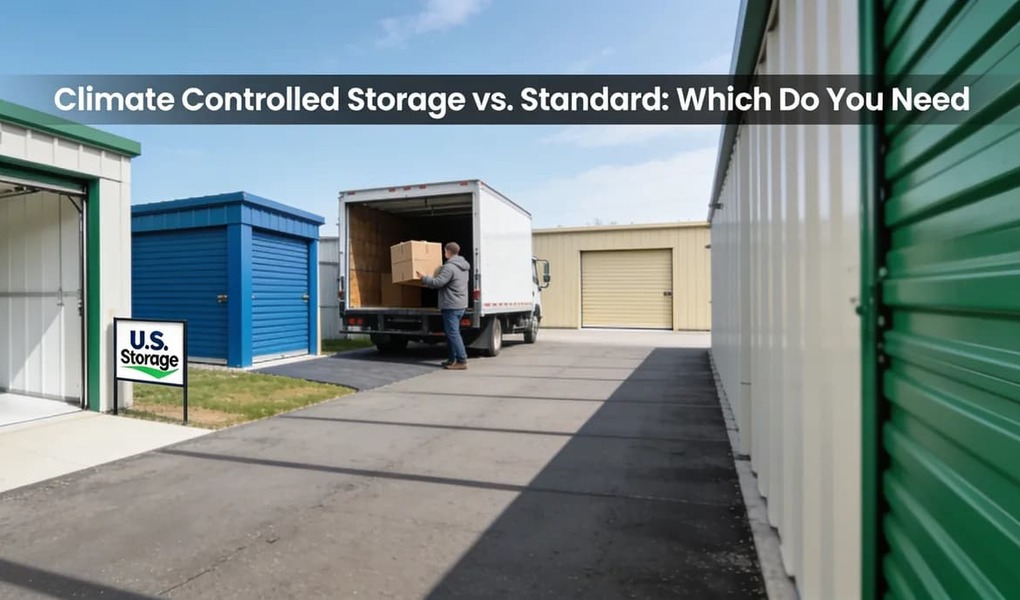
Climate control suits long-term storage of valuables, electronics, wood furniture, or documents sensitive to temperature swings and humidity, especially in regions with extreme seasonal weather. Standard units fit short-term storage of durable items like tools or seasonal gear. U.S. Self Storage lists unit prices from pricing varies monthly, with climate-controlled options priced higher for added protection.
Key Takeaways
- Climate-controlled storage maintains consistent temperatures, protecting items from extreme heat exceeding 100°F in regions like Texas.
- Standard storage units experience dramatic interior temperature fluctuations that damage sensitive items without climate control protection.
- Certain valuables require climate-controlled units to prevent deterioration, warping, and permanent damage from temperature and humidity changes.
- U.S. Self Storage in Albuquerque, NM offers both climate-controlled and standard units to match different storage needs.
What Defines Climate Controlled Storage Units?
A defined temperature and humidity range separates climate controlled storage from a standard drive-up unit. Rather than fluctuating with outdoor conditions, a climate-controlled space stays within set limits year-round. That distinction matters more than square footage when belongings are sensitive to heat, cold, or moisture.
U.S. Self Storage lists climate control as one of several unit types available to renters, alongside drive-up, indoor storage, and vehicle storage. Customers comparing pricing tiers often see these categories side by side on a facility page, which makes evaluating tradeoffs simpler before booking.
| Unit Type | Temperature Control | Typical Access | Common Amenities |
|---|---|---|---|
| Climate Controlled | Yes, set range | Indoor corridor | Gated access, surveillance |
| Indoor Storage | Limited or none | Indoor corridor | Gated access, surveillance |
| Drive-Up / Outdoor Storage | None | Exterior, vehicle-level | Drive-up convenience |
Is Climate Controlled the Same as Indoor Storage?
Not exactly. Indoor units sit inside a building and avoid direct weather exposure. They don't always maintain a fixed temperature or humidity level. Climate control adds that regulated layer on top of indoor placement, which is why facilities often market the two as separate tiers.
What Amenities Come With a Climate Controlled Unit?
Facilities pairing climate control with other protective features tend to include gated access and surveillance cameras. Some locations also offer drive-up convenience alongside climate-controlled sections, giving renters flexibility without sacrificing security. These combined amenities explain part of the premium attached to climate-controlled pricing tiers.
Outdoor storage, by contrast, offers none of that environmental regulation. Renters choosing between these categories should weigh what they're storing against how much temperature swing those items can tolerate before deciding which tier fits their budget.
How Does Standard Storage Compare to Climate Control?
Standard storage and climate-controlled storage differ in one core function: temperature regulation. Facilities typically list these as separate categories, offering outdoor storage and drive-up units alongside indoor units built for environmental control. That distinction matters more than pricing tiers suggest, especially for customers weighing whether the added monthly cost delivers real protection.
Many facilities present climate control as a premium layer added to standard security features. Gated access, surveillance, and drive-up convenience often come standard, while temperature and humidity regulation get marketed as an upgrade. Customers should treat that upgrade as a functional difference, not a cosmetic one.
| Feature | Standard/Outdoor Storage | Climate-Controlled Storage |
|---|---|---|
| Access type | Drive-up, outdoor units | Indoor storage hallways |
| Temperature stability | Fluctuates with outdoor conditions | Regulated year-round |
| Heat exposure risk | Interior can spike 20–30°F above outside temps | Minimized |
| Security features | Gated access, surveillance | Same, plus climate control |
| Best suited for | Tools, vehicles, hardy goods | Furniture, electronics, documents |
Does Standard Storage Get Dangerously Hot?
Yes. Interior temperatures inside non-climate-controlled units can climb 20 to 30 degrees above the outdoor reading. On a hot afternoon, that swing turns a standard unit into something closer to an oven than a storage space.
Does Location Change the Risk?
Location matters significantly. Regions with prolonged heat, like parts of Texas where summer temperatures routinely pass 100°F in cities such as Dallas, Austin, and San Antonio, place standard units under sustained thermal stress. Heat arrives early in these areas and lingers into fall, extending the exposure window well beyond a few summer weeks.
Which Belongings Need Climate Controlled Protection?
Certain categories of belongings require climate controlled storage far more urgently than others. Furniture, electronics, and sentimental keepsakes top that list, since each reacts poorly to heat, cold, or humidity swings. Boxes of seasonal clothing or basic tools tolerate ordinary conditions without much risk.
Apartment contents make up a large share of what renters place in medium-sized units. That category includes wood furniture, upholstered pieces, and home electronics. These goods belong to the same group of items most vulnerable to heat damage. Left in a standard unit through prolonged high temperatures, wood furniture warps and cracks over time. Electronics fare no better; internal components degrade under sustained heat exposure, shortening the lifespan of devices that would otherwise last for years.
What items justify the extra cost of climate control?
Valuable and sentimental belongings justify the added monthly expense in most cases. Photographs, documents, heirlooms, musical instruments, and family furniture fall into this category because damage cannot be reversed once it happens.
| Item Type | Climate Controlled Unit | Standard Unit |
|---|---|---|
| Wood furniture | Protected from warping and cracking | At risk during heat exposure |
| Electronics | Shielded from component degradation | Vulnerable to internal damage |
| Sentimental/valuable items | Recommended, protects against damage | Not recommended |
| Basic seasonal boxes | Optional | Generally sufficient |
Renters weighing indoor storage against outdoor storage should apply this same logic item by item. Anything irreplaceable or heat-sensitive belongs in a controlled environment; everything else can reasonably stay in standard space.
Is Climate Controlled Storage Worth the Cost?
Value depends on what sits inside the unit, not just the monthly bill. Monthly storage rates, including units with added features, generally run between pricing varies and pricing varies, with the exact figure shaped by size, location, and unit type. That range holds true across markets, which means climate controlled storage doesn't carry one fixed surcharge nationwide. Facilities set their own pricing. Two renters storing identical belongings might pay very different amounts depending on where they book.
The real question isn't the price tag alone — it's what gets protected. For sensitive belongings, the climate controlled storage benefits show up as the line between an item staying intact and slowly warping, cracking, or growing mold. Photographs, wood furniture, electronics, and documents fall into this category. Losing them to humidity or heat swings often costs far more than the extra rent ever would.
Is Paying Extra for Climate Control Actually Worth It?
For fragile or valuable items, yes; for sturdy goods, often not. Clients storing plastic totes, tools, or seasonal decorations rarely need the added protection that justifies the higher end of that pricing varies-to-pricing varies range.
Indoor storage with climate control suits long-term storage of delicate items best, while outdoor storage units work fine for durable goods that tolerate temperature swings. The smartest approach is comparing several facilities side by side before committing:
| Storage Type | Best For | Cost Position |
|---|---|---|
| Climate Controlled (Indoor) | Sensitive, valuable items | Mid-to-high end of range |
| Standard/Outdoor | Durable, replaceable items | Lower end of range |
Deciding whether climate controlled storage worth it applies to a given move comes down to inventory, not budget alone.
Which Storage Option Fits Your Move?
Movers, downsizers, and small business owners face one core decision when reserving a unit: climate controlled storage or a standard alternative. Renters benefit from comparing pricing, availability, and storage features across multiple facilities before making that call. U.S. Self Storage, operating from Albuquerque, NM, gives customers a local reference point for weighing both formats side by side.
The right choice depends on what's being stored and for how long. Seasonal belongings—vacation decorations, off-season clothing, patio furniture—are a common reason renters upgrade to protective storage rather than settling for basic outdoor storage. Long-term storage, extreme temperature swings, and sensitive or sentimental items all point toward the climate-controlled route.
| Factor | Standard/Outdoor Unit | Climate-Controlled Unit |
|---|---|---|
| Storage duration | Short-term | Long-term |
| Item sensitivity | Durable goods | Sensitive, valuable items |
| Local climate | Mild, stable | Extreme heat, cold, or humidity |
| Access style | Drive-up convenience | Enclosed, often indoor access |
Is climate-controlled storage worth the extra cost?
Whether climate control justifies the higher rate depends on what sits inside the unit. Renters answering yes to questions about extended storage timelines, harsh temperature swings, or fragile belongings gain real protection from the added expense. Skipping that protection on the wrong items risks warping, mold, or permanent damage that outweighs any monthly savings.
What items belong in indoor storage versus outdoor units?
Indoor storage suits electronics, wood furniture, documents, and photographs, since enclosed environments shield these goods from temperature swings. Outdoor units work better for tools, vehicles, and hardier items that tolerate fluctuating conditions without lasting harm.
Reviewing climate controlled storage benefits against the storage timeline. Item type helps renters avoid costly guesswork before signing a lease.
The decision between climate controlled and standard storage ultimately depends on your specific inventory and storage priorities. Evaluate the nature of your belongings, your local environmental conditions, and your budget constraints to determine which option aligns with your needs. U.S. Self Storage provides both unit types to accommodate diverse storage requirements. Contact our Albuquerque location to discuss your situation and identify the storage solution that best protects your possessions.
FAQ
Is climate controlled storage the same as indoor storage?
No. Indoor units avoid direct weather exposure but don't always maintain a fixed temperature or humidity level. Climate control adds that regulated layer on top of indoor placement.
What items need climate controlled storage?
Valuables, electronics, wood furniture, and documents sensitive to temperature swings and humidity need climate control, especially in regions with extreme seasonal weather, to prevent deterioration and warping.
What amenities come with climate controlled units at U.S. Self Storage?
U.S. Self Storage pairs climate control with gated access and surveillance cameras. Some locations offer drive-up convenience alongside climate-controlled sections for added flexibility.